
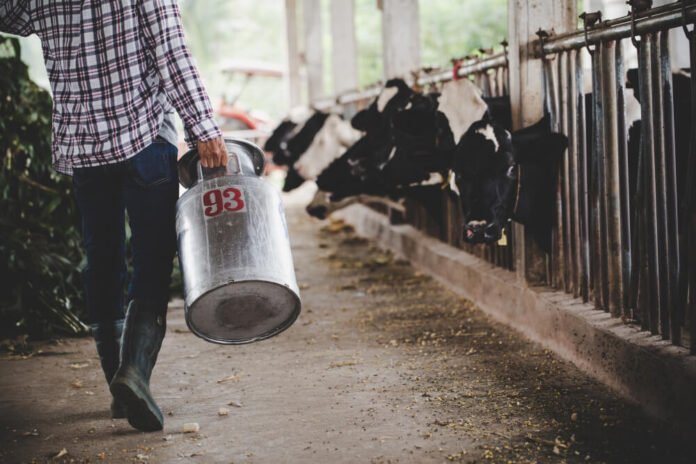
Milk, butter, cheese everyone’s got them in the fridge. If you’ve read headlines about a “dairy shortage” this year, though, those stories haven’t aged well. Step outside the social media chatter, and the reality is practically the opposite. For 2026, the real story is a flood of milk across the world and a wave of problems for people producing it.
The Myth of Dairy Shortage vs. Global Oversupply
Talk to folks in the U.S., Australia, or even Argentina, and you won’t hear about empty barns or panicked retailers struggling to stock yogurt. The myth about shortages just hasn’t panned out. In fact, what’s actually happening is a classic supply-and-demand mismatch, but it’s the oversupply side causing headaches.
While you might pay less for a block of cheddar at the checkout, dairy farmers are facing wholly different scenes. Fresh milk is piling up. Prices are sliding. Many producers are openly comparing this glut to the “milk lake” years a decade earlier.
Milk Production Keeps Climbing in Key Regions
Let’s get specific: the “Big-7” world export regions, which include the U.S., EU, New Zealand, Australia, Brazil, Argentina, and Uruguay, aren’t slowing their milking herds by much. The U.S. alone is looking at 106.2 million metric tonnes of milk production in 2026, which is a 1.2% uptick from last year. That’s not explosive growth, but it adds up especially when you line it up with other producers.
Argentina, Australia, and Brazil are also posting year-on-year increases. A lot of this comes down to decent weather, improved feed, and steady demand in some local markets.
Where things slow down is in the EU and New Zealand. The European Union, usually good for huge milk numbers, has seen herd size drop thanks to stricter environmental regulations and wellness concerns new nitrate rules from Brussels haven’t helped. Animal disease, farmer retirements, and less incentive to add cows have pushed New Zealand’s output flat, if not downward.
So, while not every country is swimming in milk, the main suppliers together have stacked up the highest growth collectively in almost ten years. There’s even been talk of a “tsunami of milk” in global industry circles.
Demand Isn’t Keeping Up, Especially From China
Last time the world saw milk piling up, there were a few big customers ready to soak it up China, most of all. Now, that’s changed. China’s own dairy farms have rapidly expanded, and the country is now about 85% self-sufficient in dairy. Imports, once a sure bet, just aren’t what they were.
That shift leaves major exporters scrambling for buyers. Consumer spending is also under pressure everywhere else, typically because people are spending more of their paychecks on essentials amid cost-of-living issues. Cheese and yogurt are staples, but in many homes, shoppers are reaching for smaller cartons, skipping premium butters, or just opting for basics. Even with population growth, global demand growth for dairy has been much softer than the supply increases.
So, even as millions of new liters roll in from milking parlors worldwide, finding drinkers or eaters hasn’t kept pace.
What’s Up With Prices?
You’d expect that with so much milk out there, prices have dropped. That’s exactly what has happened dramatically so. Since June 2025, butter and cheese prices have tumbled around 30%. Skimmed milk powder is down by about 15%. The industry tracks these through indexes like the Global Dairy Trade (GDT): it posted its worst drop since 2018 late last year before bouncing back 6.3% in early 2026. That little spike wasn’t about a big jump in drinking milk, but rather U.S. supply shifting more heavily into cheese processing.
On the farm side, milk prices have fallen off a cliff. In some major exporting countries, the farmgate price is forecast at just 37 cents per liter. The U.S. Class I base price, which dairy farmers use as a benchmark, dropped to about $16.35 per hundredweight the lowest it’s been in five years. For context, at these prices, most farmers are only just breaking even, if that.
Cheese tells a slightly different story. Despite the wider glut, demand from China and the U.S. for specialty cheeses has pushed export volumes up. New Zealand, in particular, shipped out a record 620,000 metric tonnes of cheese and related products in 2026. Still, it’s not enough to single-handedly rescue the whole sector.
How the Dairy Glut Hits Stakeholders
If you’re a farmer, you probably know someone who has already downsized their herd or switched to other business models some have even shut down altogether. With more milk than buyers, and bulk processors overwhelmed, storage for unsold products becomes a cost on its own. Think vast warehouses full of butter blocks and skim milk powder, waiting for someone to need them.
There are some winners, though. Retailers are getting lower wholesale prices from processors, so supermarkets can keep their dairy sections full without worrying about empty supply chains or big surges at the checkout. For consumers, this isn’t a bad deal unless your budget depends on the health of the local dairy economy.
For dairy processors and co-ops, the situation feels a lot like the 2015-2016 EU crisis, only stretched out. Back then, milk powders stacked up across Europe, pushing everyone to cut production almost overnight. This time, the oversupply could last longer if policymakers and export markets don’t shift course.
What Could Shift in the Next Few Years?
Looking past the next few quarters, there are some reasons to think today’s glut won’t last. Global dairy consumption is widely expected to grow again not by much, but enough to catch up with output gaps by 2030. Big markets like China could go from surplus back to deficit; some projections put their shortfall at 16–17 million tonnes in the next four years.
But that hinges on a few big ifs. If environmental regulations hold back European and New Zealand farmers, supply growth may slow well before then. There’s also a bottleneck in the pipeline: not enough young cows (heifers) in some countries through 2027.
Meanwhile, the U.S. looks set to be the supply growth engine, reaching about 234.1 billion pounds of milk. That’s not a typo: American farmers remain ambitious, partly because they’re more insulated from the strict regulations faced by European and Kiwi producers.
Still, despite churning out more milk, the price signals aren’t giving much reason for optimism. Most analysts say the sector won’t see a strong recovery unless either demand picks up or producers make tough decisions to trim supply.
Hints of Change and How the Industry Is Responding
Right now, farm groups and industry lobbyists are looking for relief or policy changes, much like after 2015. Some are pushing for more flexible production caps. Others suggest ramping up exports to less-tapped markets. Investment in cheese plants continues, since cheese is the only category really defying the global gloom.
At the ground level, more farms especially smaller family-owned ones are reconsidering if dairy is still a viable life. Some have switched to plant-based alternatives or focused on specialty, local products less exposed to global price swings.
Processors are also looking at everything from better inventory management to value-added products. Long-life dairy ingredients, protein blends, and even exporting butter to new places are all under consideration.
For global insights and business perspectives, you can check out resources like The Biz Serum, which covers everything from shifting demand to business strategies under pressure.
The Road Ahead: Not Shortage, Just New Pressures
So, if you hear about a “dairy shortage” in 2026, know this: there’s more milk being made than nearly ever before, just not enough places ready to buy it at good prices. That means cheap dairy for consumers, but mounting pressure for farmers, co-ops, and national industries built around the barn.
Could this all flip? It’s possible if demand wakes up faster, big countries like China swing back to imports, or policy changes trim supply. Until then, a lot of folks in the business are just trying to get by, watching markets and hoping for a little balance to return.
If you’re following the story for the next year or two, expect a lot of sideways movement. Prices might yo-yo, more farms may consolidate or diversify, and the global dairy trade will probably feel a little uncertain. But, for now, there’s no shortage just a complicated supply-demand puzzle where the world has a little too much milk, at least for today.

