
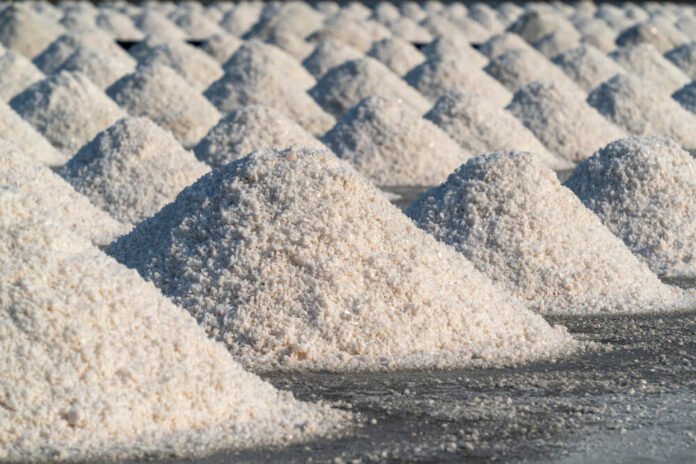
Walk into a grocery store, and getting table salt is usually a non-event. But out on city streets each winter, salt keeps the roads safe and these days, it’s becoming a very big deal across parts of North America. Some regions are facing such a huge shortage of de-icing salt that cities and contractors are scrambling. Sounds odd, but this quiet crisis is real, and it’s starting to grab attention.
How We Got Here: A Perfect Storm of Salt Problems
Salt isn’t just for your fries. States like New York and places around Northeast Wisconsin depend on millions of tonnes every year to keep roads usable when winter hits. Annually, North America uses around 28.5 to 36 million tonnes of salt just for de-icing roads. That’s a market worth between $2.3 and $2.9 billion.
Thing is, demand keeps climbing, especially when winters are harsher or longer than anyone expected. The problem? The overall infrastructure is showing its age. Salt mines are closing, and no major new sites have come online since the early 2000s. It’s kind of like having more traffic on the highway every year, but never widening the road.
Then, there’s the matter of imports. The U.S. relies on bringing in 8-10 million tonnes of salt each year, with much of that coming by ship from places as far away as Chile, Mexico, Egypt, and a cluster of Caribbean countries. Once a mine in North America closes, filling that gap isn’t quick or easy especially if a shipment takes two weeks to arrive and any hiccup slows things down.
The Local Impact: Contractors in a Pinch, Towns on Edge
Let’s zero in on Northeast Wisconsin. If you talk to contractors there, they’ll tell you they’re having trouble getting enough salt. Some might even joke you’d be better off buying lotto tickets than hoping for another supplier with a few spare truckloads.
But here’s the confusing bit: some city and county warehouses seem to have enough salt tucked away for now. So, while municipalities say they’re fine, it’s the smaller players private contractors, local businesses, independent snow clearers who are stretched thin. Supply just isn’t reaching everyone in the same way.
It’s not just Wisconsin. New York ran into major headaches before the 2024-2025 winter, with red flags raised across city budgets and maintenance crews. A kind of mini-panic set in when suppliers started quoting prices way above what officials planned for. Rates jumped from around $43 per tonne to over $58, practically overnight. That means higher costs for everyone, and often less salt stored in reserve.
Now, there’s talk in industry circles about whether next season 2025 into 2026 might see what some are calling “the Great Salt Shortage.” Some say that’s more myth than fact, while others are quietly preparing for another tough year.
The Salt Supply Chain: Why North America Is Uniquely At Risk
Here’s where things get a little complicated. Globally, salt production’s sitting steady about 280 to 290 million tonnes per year, for the last few years. The global salt market is actually growing, poised to top $26 billion in 2025 and possibly heading toward $39 billion in the 2030s. Most of this growth isn’t even for de-icing; it’s for everything from chemical processing and water purification to table salt and fertilizer.
Asia Pacific is leading that charge, with huge operations in China and India. But North America? That’s where things go sideways.
First, that heavy import dependence means that anything weather delays, shipping route changes, labor issues, even politics can throw a wrench in deliveries. It takes over two weeks for a salt ship to arrive from places like Chile, while a domestic mine can get product to the East Coast in about three days. During a hard winter, every hour counts.
Meanwhile, new mines aren’t opening fast enough to balance out every closure. The last big facility to come online was American Rock Salt way back in 2001, and it’s still plugging away, but with all the extra demand, it’s not enough. Some older mines have scaled back yearly output, either because they’re less productive or because maintenance and upgrades haven’t kept up.
And as imports have become a bigger slice of the pie, total contract prices for salt have jumped. What used to be a stable, predictable part of a public works budget is now something that keeps city managers up at night.
When Salt Gets Expensive: What Higher Prices Really Mean
Let’s talk dollars and cents. With prices climbing to around $58 a tonne in recent years a big leap from the old going rate it starts to change who can afford to buy in bulk. Cities with bigger budgets can sometimes outbid private contractors. But smaller towns, schools, and companies might end up with less to spread on roads and sidewalks.
A higher sticker price also affects whether some de-icing alternatives make sense. But for now, there’s no magic chemical that does the job quite like salt. It’s available, simple, and until recently affordable. The steady rise in bulk prices is setting the stage for new players to step in, hoping to fill the gap with local, lower-cost options.
Trying to Find Solutions: New Projects and Old Problems
Nobody wants winter chaos. So cities are branching out, signing contracts with several different suppliers instead of sticking with just one. The hope is that spreading out orders makes them less vulnerable if a shipment gets stalled.
There’s also more interest in local salt sources and environmentally-friendly mining. Some municipalities are betting that locally-mined, ethically-produced salt could help with both supply issues and public image. If they buy closer to home, they worry less about global shipping delays and cut down on greenhouse gas emissions from cargo vessels.
That optimism is helping support proposals for new mining projects, like the big plans for the Great Atlantic salt project, which could pump out roughly 4 million tonnes each year for a lot less than today’s average price. Something like this could bring prices under $35 a tonne, making it viable for both cities and smaller buyers.
Investors are watching all of this closely. With structural shortages growing and potential profits rising, you can see why new salt projects are starting to attract serious interest. Folks looking for detailed insights or other stories in this space can check out sites like thebizserum.com for more coverage.
Looking Ahead: What the Future May Hold
North America’s salt shake-up isn’t all doom and gloom. There’s no global shortage factories and mines are still churning it out from South America to Asia. But the way things stand, big regions here are playing catch-up.
Experts say that even if new mines break ground soon, they won’t instantly solve next winter’s shortages. It can take years to plan, permit, and open a large-scale mine. Meanwhile, improvements in storage, distribution, and contract management might keep things from getting worse in the short term.
There’s also some hope that governments will see the need for fresh investment in salt infrastructure, both to shore up supplies and maybe to boost economic activity in mining towns. Public and private players alike are still figuring out what “plan B” really looks like.
Bottom Line: No Quick Fix, but the Conversation’s Changing
So, what can we expect? Salt is likely to stay expensive, at least until new supplies hit the market. For now, everyone from city planners to trucking contractors is learning to do more with less and hoping that the winter ahead is manageable.
Choices about where and how to buy salt are getting a lot more scrutiny, especially after the shocks of the last few years. If you run a business or a maintenance team, you’ll want to keep an eye on the next round of contracts and be ready for possible delays.
One thing is clear: this isn’t just a story for engineers and city hall. It matters in real, visible ways anyone who commutes after a snowfall knows that. The salt shortage is one of those issues that flies under the radar, right up until it hits home.
References
1. S&P Commodity Insights, “Salt Market Analysis and North American Import Trends,” 2023-2024.
2. Globe and Mail: “North America’s Road Salt Squeeze,” February 2024.
3. Fortune Business Insights, “Salt Market Size and Growth Projections: 2025-2034.”
4. Wisconsin Salt Association, “Sorting Fact from Fiction: Predictions for 2025/2026.”
5. Green Bay Press Gazette, “Contractors Feel Pinch as Salt Supplies Tighten,” Winter 2024.
6. Reuters, “Global Shipping Costs and Salt Supply Chains,” October 2023.

